


By Dr. Grace El Tayar
Leadership, at its highest level, is not tested in moments of clarity it is tested in moments of difference. Different perspectives. Different speeds. Different ways of thinking, deciding, and communicating. What often appears as resistance, misalignment, or even incompetence is something far more nuanced: a difference in behavioral wiring.
This is where DISC becomes not just useful, but essential.
The DISC framework, rooted in the work of William Moulton Marston, offers a scientifically grounded lens into observable human behavior. Unlike deeper personality constructs that explore identity and cognition, DISC focuses on what leaders need most in real time: how people act, respond, communicate, and make decisions especially under pressure.
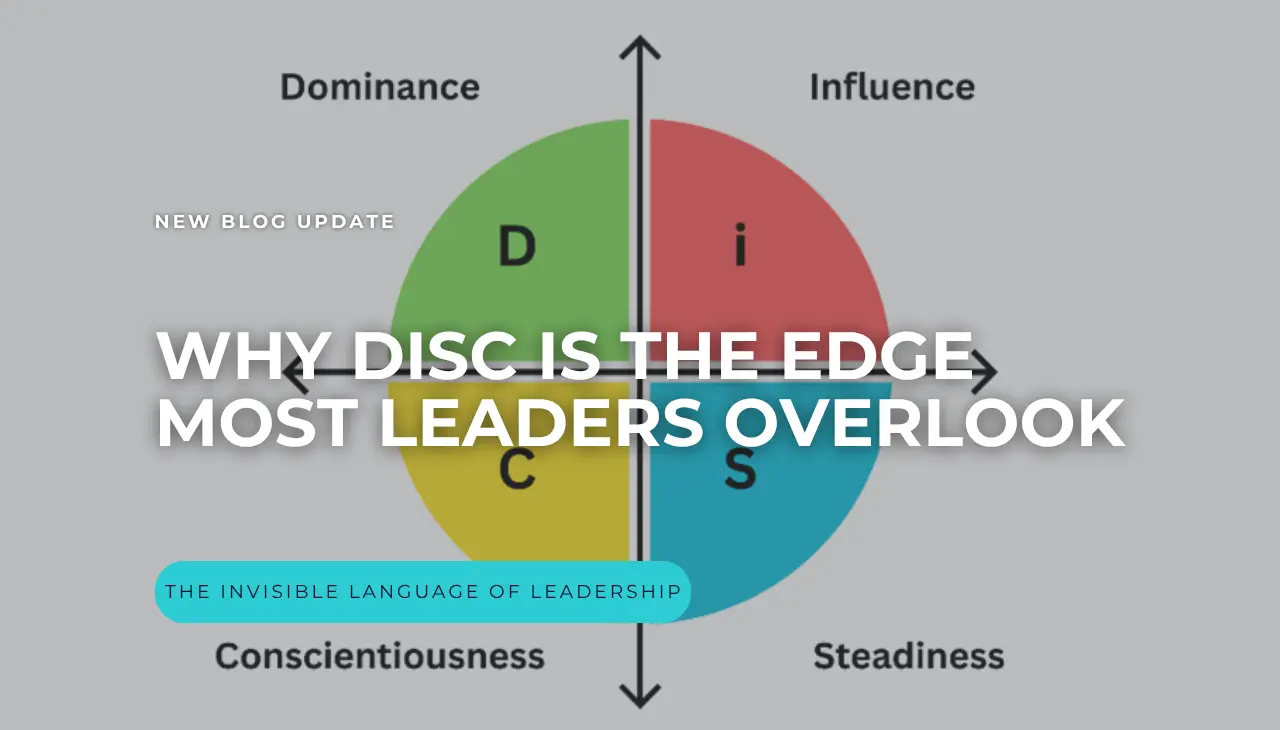
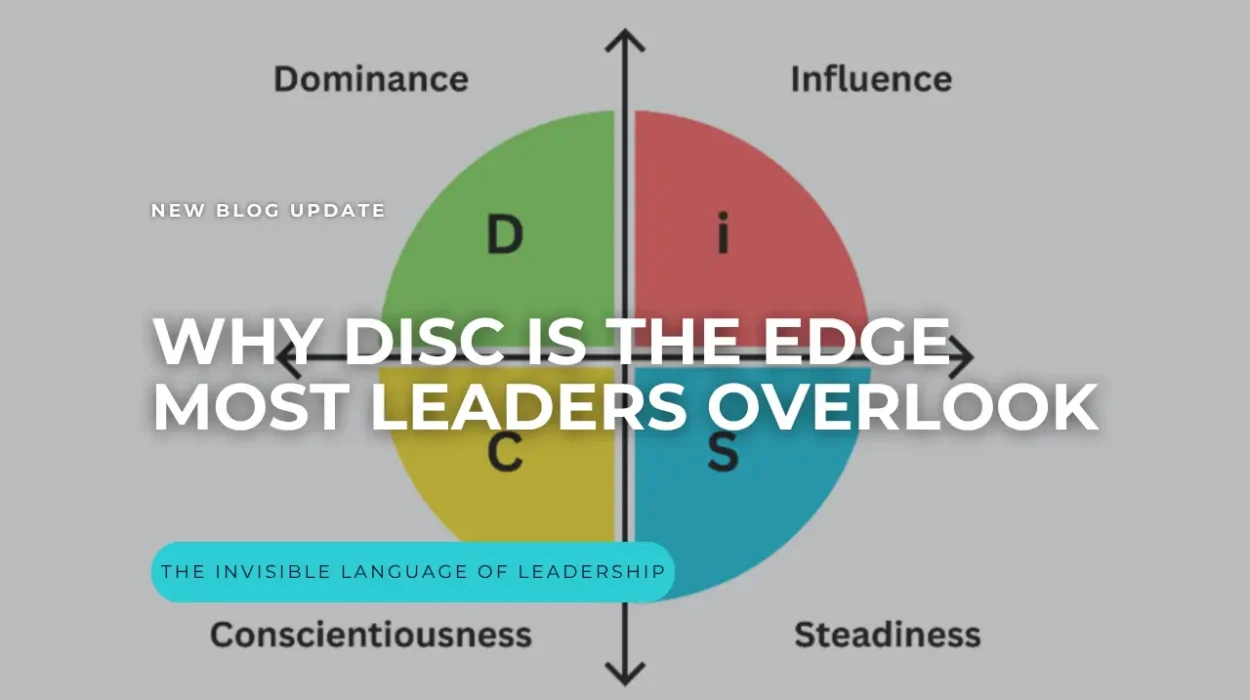
At its core, DISC identifies four behavioral dimensions: Dominance, Influence, Steadiness, and Conscientiousness. These are not rigid categories, but dynamic patterns that shift depending on context, environment, and stress. What makes DISC powerful is not the classification itself, but the leader’s ability to recognize these patterns quickly and adapt accordingly.
Dominance, often referred to as the “D” style, reflects a results-oriented, decisive, and control-driven approach. These individuals move quickly, speak directly, and prioritize outcomes over process. In a boardroom, they are the ones pushing for action, often cutting through complexity with a sense of urgency that can either accelerate progress or override important nuance. Engaging effectively with this style requires clarity, brevity, and confidence. They are not persuaded by length they are persuaded by precision.
Influence, the “I” dimension, brings a different energy entirely. It is expressive, relational, and future-oriented. These individuals are often the voice of vision and the drivers of engagement within teams. They connect ideas to people and people to purpose. In leadership settings, they are the ones who shape perception, build momentum, and mobilize others. To influence them, one must first connect, because logic alone is rarely sufficient without engagement and shared enthusiasm.
Steadiness, represented by “S,” introduces the often-underestimated force of consistency and trust. These individuals value stability, harmony, and long-term relationships. They are the anchors within organizations, ensuring continuity and cohesion. While they may not dominate conversations, their influence lies in their reliability and their ability to sustain teams through change. When engaging with this style, pace matters. Trust must precede pressure, and clarity must replace ambiguity.
Conscientiousness, or “C,” reflects precision, structure, and analytical rigor. These individuals are driven by accuracy and need to understand before acting. They bring depth, logic, and risk-awareness into decision-making processes. In governance environments, they are indispensable. They ask questions others may overlook and ensure that decisions are not only fast, but sound. Engaging with this style requires preparation, evidence, and respect for detail.
Yet the true sophistication of DISC lies not in these individual dimensions, but in how they combine. Very few leaders operate from a single style. A Dominance–Influence blend, for instance, creates a leader who is both decisive and persuasive capable of driving outcomes while shaping narratives. A Dominance–Conscientiousness profile produces a strategist who balances speed with precision. Influence–Steadiness creates a relational leader who inspires while maintaining cohesion, while Conscientiousness–Steadiness reflects a measured, dependable approach grounded in stability and accuracy.
Understanding these combinations allows leaders to move beyond surface-level interpretation and into predictive insight. You begin to anticipate reactions, identify sources of friction, and adjust your communication before misalignment occurs. This is where DISC transitions from a model into a leadership instrument.
Nowhere is this more relevant than in the boardroom.
Boards are, by nature, environments of high stakes and diverse perspectives. Decisions are rarely delayed due to lack of intelligence; they are delayed due to differences in how intelligence is expressed and evaluated. A highly dominant board may push aggressively toward action, sometimes at the expense of due diligence. A highly conscientious board may seek exhaustive analysis, risking missed opportunities. The role of the effective leader is not to align everyone to one style, but to integrate all styles into a coherent decision-making process.
This is behavioral governance.
When leaders understand DISC, they stop interpreting behavior personally and start interpreting it strategically. A direct challenge is no longer seen as opposition, but as a Dominance-driven need for control. A hesitation is no longer resistance, but a Steadiness-driven need for reassurance. A request for detail is not obstruction, but a Conscientiousness-driven need for certainty. An expressive reaction is not distraction, but an Influence-driven need for connection.
This shift alone transforms the quality of interaction, reducing unnecessary conflict and accelerating alignment.
Research in emotional intelligence and leadership effectiveness, including the work of Daniel Goleman and Richard Boyatzis, consistently demonstrates that leaders who adapt their behavior to others outperform those who rely solely on positional authority or intellectual capability. DISC operationalizes this adaptability in a way that is both practical and immediately applicable.
Ultimately, DISC is not about understanding people in theory. It is about leading them in reality.
It invites a fundamental shift from speaking in one’s own natural language to becoming fluent in the languages of others. From pushing messages to designing communication. From reacting to behavior to anticipating it.
And in doing so, it elevates leadership from competence to mastery.
As we expand this exploration, it becomes essential to look not only at how people behave, but how they think. This is where the Myers-Briggs Type Indicator (MBTI) adds another layer of depth. While DISC reveals external behavioral patterns, Myers-Briggs uncovers internal cognitive preferences the ways in which individuals perceive information and make decisions.
Together, they form a powerful dual lens: behavior and cognition, action and intention.
In my next article, I will take you deeper into the Myers-Briggs framework, exploring how cognitive diversity shapes leadership styles, board dynamics, and decision-making at the highest levels.
Because true leadership is not defined by how clearly you see the world.
It is defined by how effectively you navigate the different ways others see it.
©2026 Grace El Tayar
