


By Dr. Grace El Tayar
Leadership | Emotional Intelligence | Governance
In boardrooms across the world, strategy is often treated as the crown jewel of organizational success carefully analyzed, refined, and presented with precision. Yet, time and again, we witness even the most sophisticated strategies falter. Not because they were flawed on paper, but because they collided with a far more powerful force and far less understood: culture.
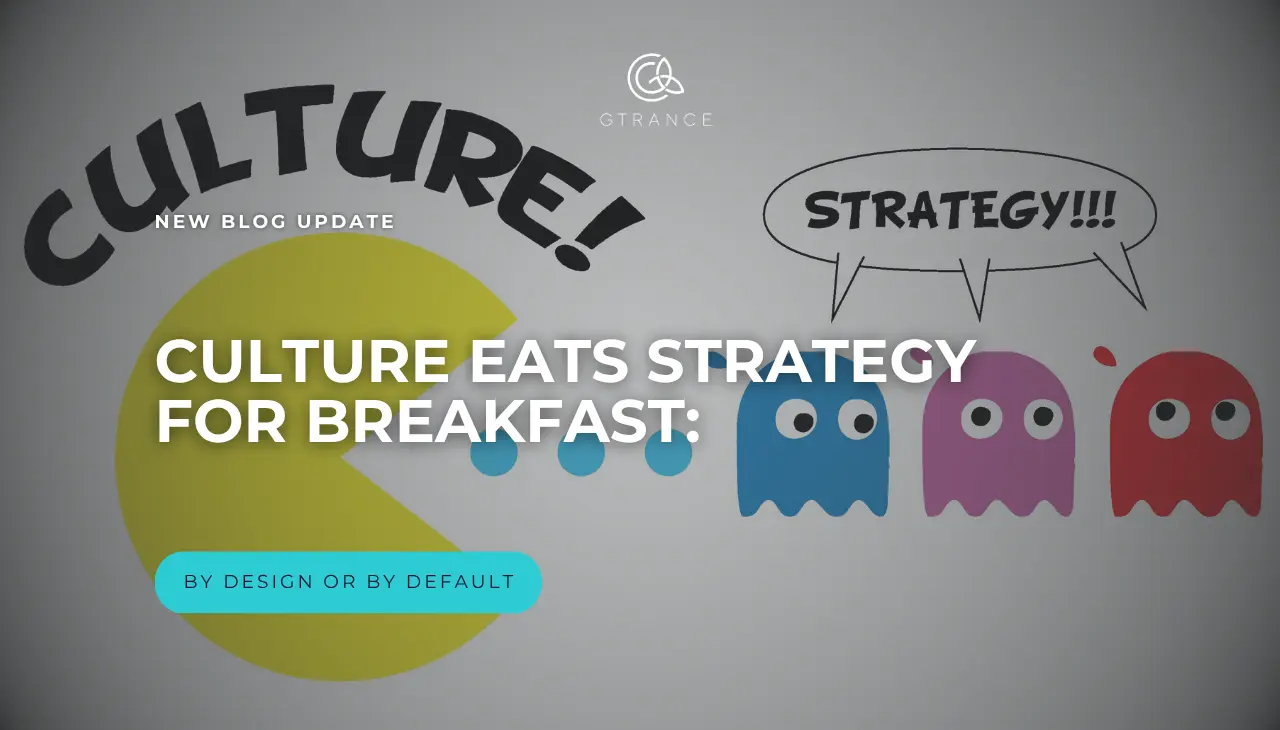
During my executive education at MIT, one principle was consistently reinforced by leading professors in strategy and organizational behavior: culture is not a “soft” variable. It is the operating system of an organization. And as the well-known phrase goes, culture eats strategy for breakfast. Not occasionally, not metaphorically but predictably.
Culture is often misunderstood precisely because it cannot be easily seen. It does not live in policies alone or in elegantly framed value statements on office walls. It lives in behavior in the quiet moments, in the difficult conversations, in the decisions made under pressure. It is how people act when no one is watching, and equally, how they respond when everything is at stake. It shapes whether innovation is encouraged or quietly suppressed, whether accountability is real or selectively applied, whether collaboration is authentic or merely performative. In essence, culture determines whether strategy is executed or quietly abandoned.
And yet, despite its undeniable impact, culture continues to be underestimated. One reason is that it resists simple measurement. Leaders are naturally drawn to what can be quantified in financial results, operational metrics, performance indicators while culture feels intangible and elusive. But the deeper reason is that culture demands something far more difficult than strategic planning: it demands introspection. It requires leaders to confront not only systems and structures, but also behaviors, inconsistencies, and, at times, uncomfortable truths. It demands consistency in a world that often rewards short-term wins. Most of all, it exposes the gap between what organizations claim to value and what they tolerate.
From a governance perspective, culture is not an HR initiative. It is a boardroom imperative. As a Chartered Governance Professional and Non-Executive Board Director, I have seen how culture cascades from the very top of an organization. The tone is not set through declarations alone, but through decisions and the questions the board asks, the behaviors it rewards, the risks it is willing to accept, and the ethical boundaries it refuses to cross. Where there is ambiguity at the top, there will be inconsistency throughout. Where there is clarity and integrity, culture becomes a strategic advantage rather than an afterthought.
Culture, however, does not exist in isolation. It is deeply intertwined with an organization’s mission, vision, and values. The mission defines why the organization exists. The vision defines where it is going. The values define what it stands for. Culture is how all of this comes to life and how people behave in pursuit of that purpose and direction. When these elements are aligned, organizations operate with coherence and clarity. When they are not, the consequences are immediate and visible. An organization cannot claim innovation as a value while punishing failure, nor can it promote collaboration while rewarding individual competition. Misalignment does not remain theoretical, it manifests in confusion, disengagement, and ultimately, underperformance.
At the center of this alignment stands leadership. Leaders are not only architects of strategy; they are carriers of culture. Every action, every decision, every reaction sends a signal. Employees do not follow statements; they follow behavior. This is where emotional intelligence becomes not just relevant, but essential. Leaders must be acutely aware of the emotional climate they create, the psychological safety they enable or inhibit, and the consistency between their words and their actions. Culture is not communicated only through what is said, but through presence, tone, and timing. Leadership, in its truest sense, is culture in motion.
It is during times of change, however, that culture reveals its full power. Many transformation efforts fail not because of poor strategy, but because of cultural resistance. Change management is, at its core, culture management. When organizations attempt to transform whether digitally, structurally, or strategically they are asking people to let go of familiar patterns, to step into uncertainty, and to adopt new ways of thinking and behaving. Without cultural readiness, even the most well-designed initiatives encounter friction. Change does not happen through announcements; it happens through adoption. And adoption is deeply human.
This is why human capital is not simply an asset, in fact, it is the living embodiment of culture. People do not execute strategy in a vacuum; they interpret it through the cultural environment in which they operate. A strong culture attracts aligned talent, retains engaged individuals, and fosters a sense of ownership and accountability. It creates space for innovation, resilience, and trust. Conversely, a misaligned or toxic culture will quietly erode performance, no matter how capable the individuals within it may be. Investment in people, therefore, is not separate from strategy, it is strategy.
The question that often arises is whether culture, given its intangible nature, can truly be measured. The answer is yes but not simplistically. Culture reveals itself through patterns: in how people feel, how they behave, and how they perform. It can be assessed through engagement and sentiment, through retention trends, through leadership feedback, and through the alignment or misalignment between stated values and daily actions. More importantly, culture is visible in outcomes. Are decisions consistent with values? Are leaders trusted? Do teams feel empowered? Measurement is not about reducing culture to numbers, but about making the invisible visible about understanding what is truly happening beneath the surface.
Enhancing culture, then, is neither accidental nor immediate. It requires deliberate intention and sustained effort. It begins with clarity defining not just what the organization aspires to be, but how that aspiration translates into everyday behavior. It requires leadership alignment, where those at the top consistently model and reinforce the desired culture. It demands that systems performance management, incentives, and governance structures are aligned with cultural expectations. It calls for continuous communication, where culture is not only stated but reinforced through stories, recognition, and dialogue. And above all, it requires accountability and the willingness to address behaviors that contradict the desired culture, without exception. Culture does not change through slogans or declarations. It changes through what is consistently reinforced, what is rewarded, and what is no longer tolerated.
In the end, culture is not a peripheral concern. It is the foundation upon which everything else is built. Strategy may define direction, but culture determines whether the organization moves forward or stands still.
In my work across governance, leadership, and transformation, one truth remains constant: organizations do not rise to the level of their strategy; they fall to the level of their culture.
The question, therefore, is no longer whether culture matters. The question is whether leaders are prepared to shape it intentionally, consistently, and courageously.
©2026 Grace El Tayar
