


By Dr. Grace El Tayar
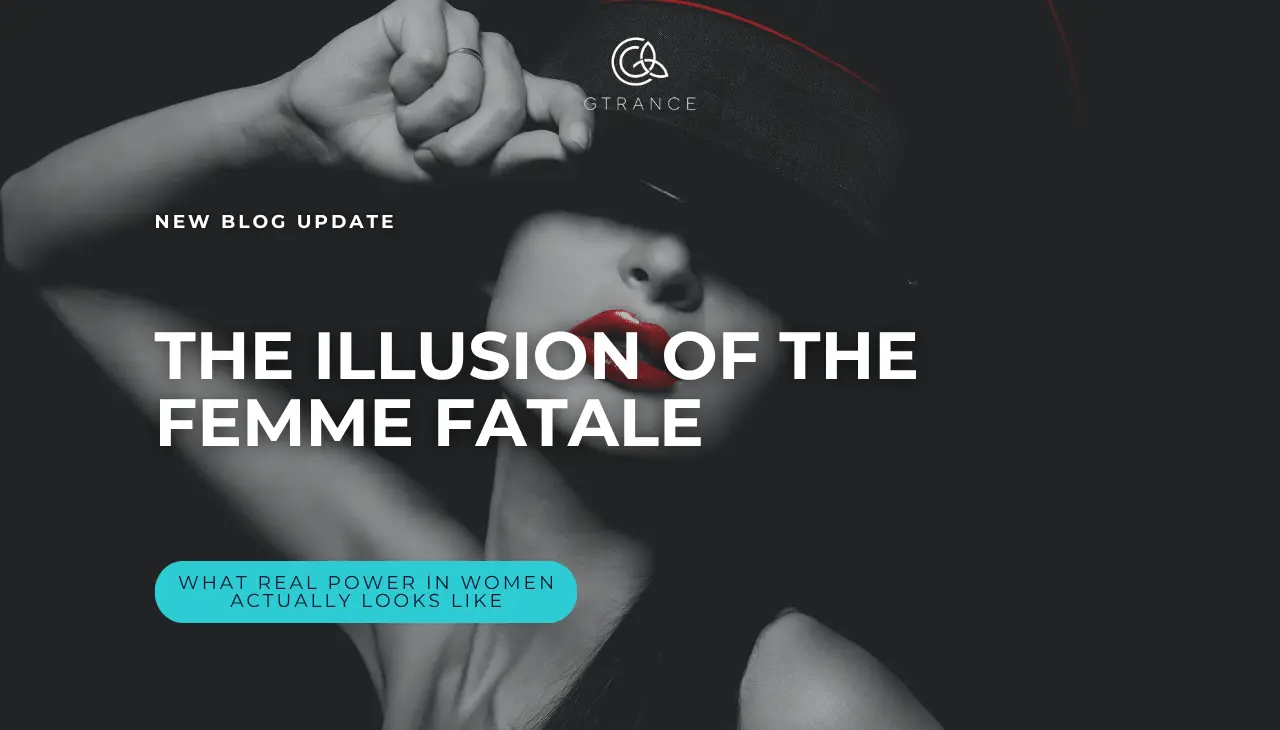
There is a growing narrative in modern culture that encourages women to “become the femme fatale” a woman who is mysterious, emotionally controlled, and irresistibly magnetic.
At first glance, it appears empowering. It speaks of self-worth, boundaries, and independence. It tells women to stop chasing and start attracting. And in many ways, this is a necessary correction to years of over-giving, people-pleasing, and emotional self-abandonment.
But beneath the surface, something deeper is happening, something far more important than adopting a new identity.
Because real power is not found in becoming a persona. It is found in becoming whole.
The concept of the femme fatale, as it is often presented today, is a simplified interpretation of a much more complex psychological truth. What is being described as “dark feminine energy” is, in reality, a mix of emotional regulation, self-respect, and controlled expression.
These are not mysterious forces. They are developed capacities.
When a woman stops over-explaining, she is not becoming mysterious she is setting boundaries.
When she stops chasing, she is not becoming magnetic she is reclaiming self-worth.
When she pauses before reacting, she is not becoming seductive, she is practicing emotional intelligence.
The danger lies in mistaking performance for integration.
Many women, in attempting to embody this “femme fatale” identity, begin to suppress rather than integrate. They become less reactive, but also less expressive. They become more controlled, but also more guarded. What appears as strength can sometimes be a refined form of avoidance.
True power does not come from detachment. In fact, it comes from a grounded presence, and this is where psychology offers a deeper lens.
From the perspective of attachment theory, the most attractive and stable individuals are not those who withdraw or create mystery, but those who operate from a place of internal security. They are neither chasing nor avoiding. They are choosing.
From a Jungian perspective, the integration of the masculine and feminine within each individual the animus and anima is what creates wholeness. A woman who is fully expressed is not only intuitive and receptive, but also decisive, structured, and self-directed. She does not need to perform power, she embodies it.
In leadership, this becomes even more critical.
A woman who leads from an unintegrated place may either overcompensate through control or retreat into emotional sensitivity. But a woman who has integrated both dimensions, structure and intuition on one hand, and clarity and empathy on the other hand, brings a rare form of leadership that is both grounded and expansive.
The same applies in relationships.
The most powerful dynamic is not built on strategy, distance, or emotional games. It is built on presence, polarity, and mutual respect. A strong woman does not need to create distance to be valued. She needs to be deeply anchored in herself.
The truth is simple, yet often misunderstood:
We are not attracted to who we pretend to be. We are attracted from what we have integrated within ourselves.
The evolution of feminine power is not about becoming harder, colder, or more elusive. It is about becoming more aligned, more self-aware, and more internally resourced. It is about knowing when to lead, when to receive, when to speak, when to hold space, when to act and when to allow. Perhaps most importantly it is about no longer abandoning oneself in the process of being chosen. Because real magnetism is not created through performance, it is felt through presence and presence cannot be faked.
©2026 Grace El Tayar
